

Tsen Wharton
Baron of Midmar
The Much Honoured Baron of Midmar (Tsen Richard Farrington of Midmar, Baron of Midmar)
Credentials
- • Previous-holder father: Rolls of the Chiefs and Heads of Territorial Houses, Officially-Recognised by Lord Lyon King of Arms 11th Oct 1980 (LXIII 49), EDINBURGH GAZETTE
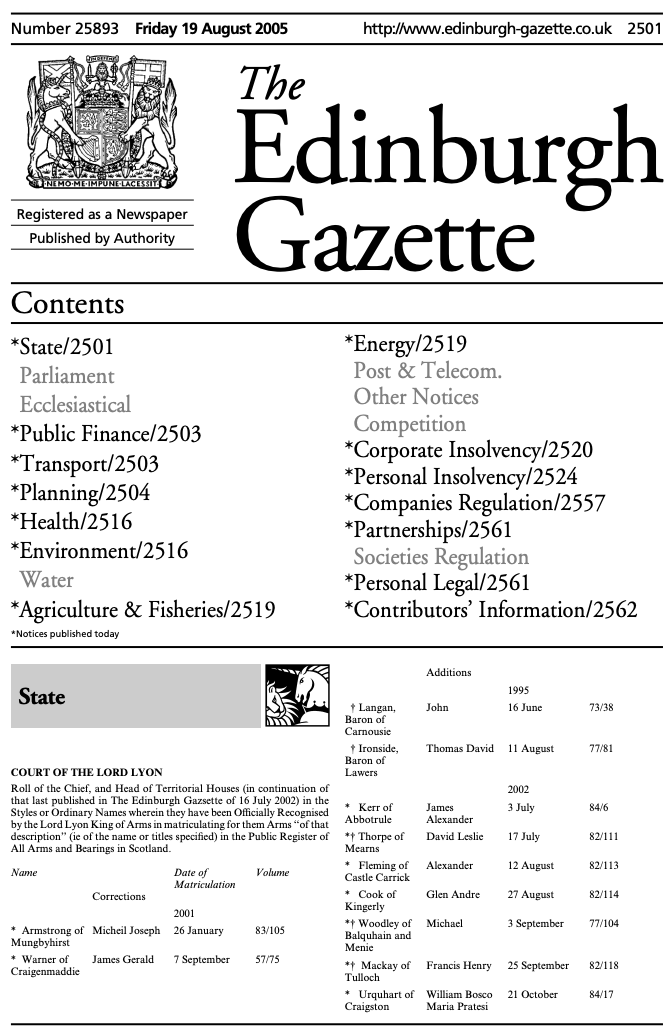
- • Previous-holder brother: Rolls of the Chiefs and Heads of Territorial Houses, Officially-Recognised by Lord Lyon King of Arms 31str Mar 2004 (LXXXV 75), EDINBURGH GAZETTE 19th Aug 2005
- • Rolls of the Chiefs and Heads of Territorial Houses, Officially-Recognised by Lord Lyon King of Arms 31str Mar 2004 (LXXXV 75), EDINBURGH GAZETTE 19th Aug 2005
- • PLEDGED HEREDITARY TITLE, baronies held across generations are treated by the Roll, for its own purposes, as de facto hereditary and dynastic. The title becomes unrecognised by the Roll if the barony is later conveyed outside the family, in accordance with Roll policy.
Authentication
Browse the full Roll — index of all entries →
A note on terminology: “Scottish feudal barony” or “feudal title” is an incorrect, defunct historical term for extant barons. Baronies were feudal until 28 November 2004, when feudal baronies were abolished and the dignity of baron was retained — an extant barony is no longer “feudal”. The correct term is Scottish barony or Scottish baron (or baron, lord or earl in the Baronage of Scotland, collectively the minor barons of Scotland); never “feudal baron”. Why the term is defunct →
A note on pledged baronies on the Roll of Scottish Barons: Pledged baronies descend by blood, they are not in commercio. What the Hereditary Title means →
© 2026 Baronage of Scotland Association · Copyright & database rights · Privacy notice