
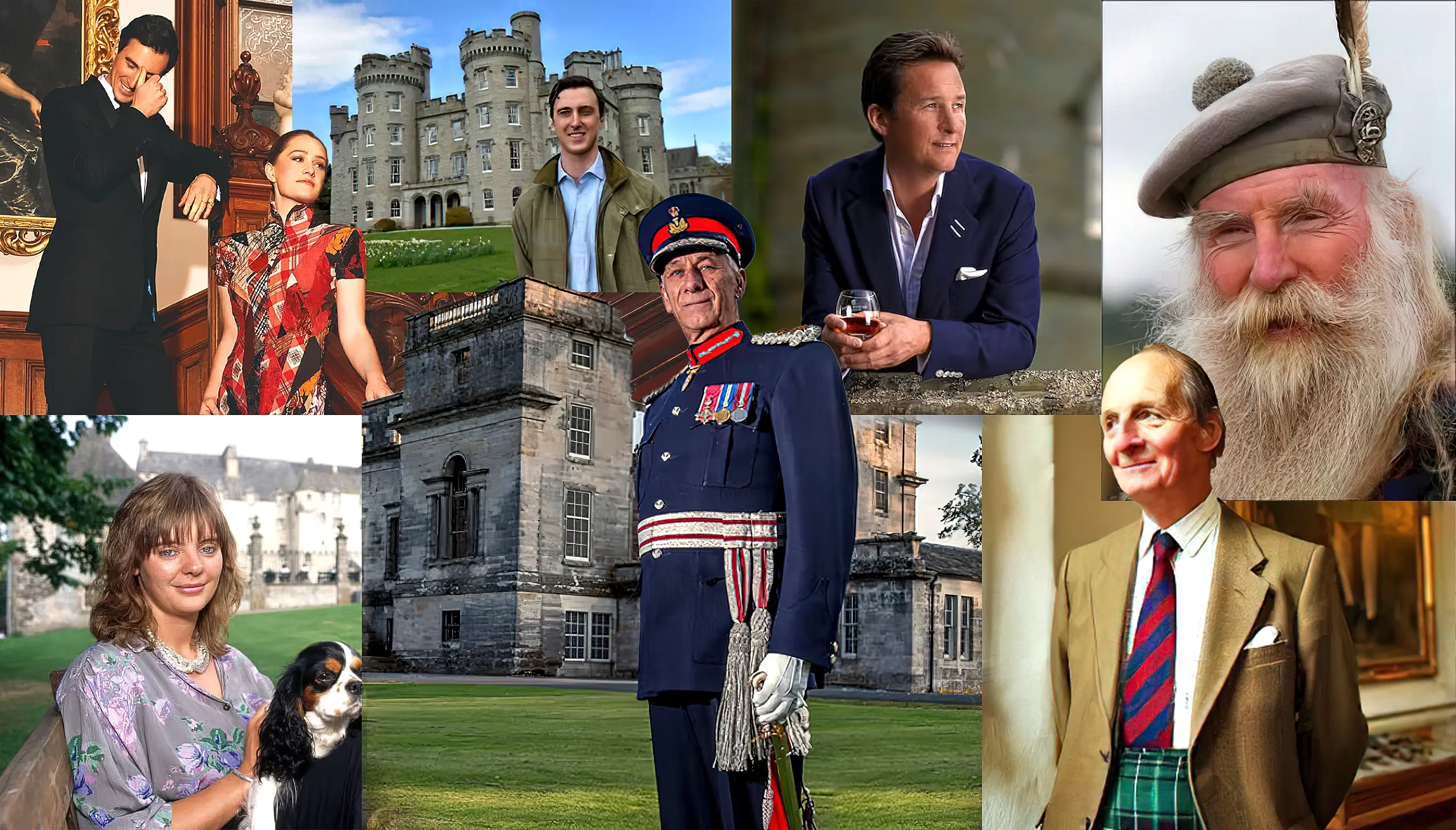
 Recognition
Under the rules of the Roll, unverified titles are not recognised by barons listed below or by cooperating organisations & institutions.

 Inherited & Pledged
The chapeau or coronet (“Hereditary on the Roll”) marks a barony pledged and not in commercio; not a category of law.
Douglas. Sir Robert Douglas, The Baronage of Scotland (Edinburgh, 1798), p. 1: “These lesser or free barons had their full share of the legislature, and sat and voted in parliament with the peers.” He goes on: those who sent commissioners “were freed from a heavy fine that was the consequence of their non-attendance”, “all free barons and free-holders of note being still bound to make their appearance in the great council of the nation”.
Broun. Sir Richard Broun, The Baronetage for 1843, p. 239. His Latin and Scots are given in English (proceres regni, inter magnates, “Lovit Cousin”). The opening is shortened: where we print “[The barons formed] a powerful section of the nobles of the realm”, he wrote that the barons “formed the most numerous and not least powerful section of the PROCERES REGNI SCOTIÆ”, the nobles of the realm of Scotland. The ellipsis marks his closing clause on supporters.
Each claim, checked against the record:
- Seat and voice in Parliament. Yes. Act of 1428, RPS 1428/3/3; Parliament of 1567, “the barons of this realm ought to have vote in parliament as a part of the nobility”, RPS 1567/12/45.
- “Beloved Cousin”. In part. The King’s word for a baron was “our lovit” or “traist freind”; “cousin” was for earls and lords, though a few lairds were so called: James VI in 1571 wrote of “oure weilbelovit cousing, Mathew Campbell of Lowdoun, knycht” (Exchequer Rolls of Scotland, vol. XX, p. 61, note).
- “Noblemen” in Acts of Parliament. Yes. Act of 1540, “every noble man, such as an earl, lord, knight and baron”, RPS 1540/12/30; Act of 1592, “the nobility, earls, lords and barons”, RPS 1592/4/72.
- “Right Honourable”. Yes, as a courtesy. Peers used it to barons from the 1570s to 1715: “the rycht honorabill the Barrone of Kylraok”, the Earl of Crawford, 1579 (Family of Rose of Kilravock, p. 270).
- Pit and gallows. Yes, where the charter said so (Stair, Institutions, 1681, p. 276). The Act of 1746 ended it.
- Robes by statute. Yes, on Innes of Learney’s reading: the Act of 1455 gave “the other lords of parliament”, who then included the barons, a red mantle, RPS 1455/8/12.
The full table, with his point on supporters, is in How the baronets pleaded the barons’ nobility.
Mackenzie. Sir George Mackenzie, The Science of Herauldry (1680), ch. XXXI, p. 94, as Broun quoted him; “[barons]” stands for his “they”.
1707. Protest of George Lockhart of Carnwath, 7 January 1707, RPS 1706/10/214.
See also the History of the Scottish Baronage.