
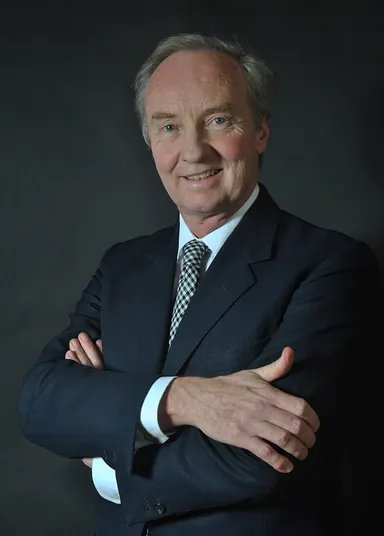
The Duke of BuccleuchThe Baron of Branxholm
Baron of Drumlanrig, Baron of Mortonwoods, Baron of Sanquhar, Baron of Synton, Baron of Tarras, Lord of Dalkeith, Lord of Liddesdale, Lord of Torthorwald, (other titles are peerages), Chief of Clan Scott

His Grace The Duke of Buccleuch (Richard Walter John Montagu Douglas Scott, 10th Duke of Buccleuch, Duke of Queensberry, Marquis of Dumfriesshire, Earl of Buccleuch, Earl of Dalkeith, Earl of Drumlanrig and Sanquhar, Viscount of Nith, Torthorwald and Ross, Lord Scott of Buccleuch , Lord Scott of Whitchester and Eskdaill, Lord Douglas of Kinmount, Middlebie and Dornock in the peerage of Scotland - Earl of Doncaster, Baron Scott of Tindale in the peerage of England - Baron of Drumlanrig, Mortonwoods, Sanquhar, Synton, Tarras, and Lord of Dalkeith, Liddesdale and Torthorwald in the baronage of Scotland - Chief of Clan Scott)
peer addressed as Your Grace or The Duke
Credentials
- • Wikipedia's "Feudal barons of Buccleuch (1488)" is unsourced. Buccleuch was a lairdship within the barony of Branxholm (RMS ii, no. 772, 1463; RMS vi, no. 956, 1598), and the estates were later erected into the free earldom of Buccleuch (RPS 1693/4/150). en.wikipedia.org/…/Duke_of_Buccleuch
- • Branxholm RMS ii, no. 772, p. 165 (7 Dec [1463] (4 Jac. III)) archive.org/…/1up
- • Drumlanrig RMS ii, no. 2099, p. 443 (19 May [1492]) archive.org/…/1up
- • Dalkeith RPS, 1693/4/150 (recitation of a charter of 28 July 1642) (15 June 1693 (recited charter dated at Beverley, England, 28 July 1642) rps.ac.uk/trans/1693/4/150
- • Lord of Liddesdale RPS, 1693/4/150 (recitation of a charter of 10 Nov 1647) (15 June 1693 (recited charter dated at Hampton Court, 10 November 1647)) rps.ac.uk/trans/1693/4/150
- • Sanquhar RPS, 1669/10/124 (recitation of a charter of 20 Jan 1664) (23 December 1669 (recited charter dated at Whitehall, 20 January 1664)) rps.ac.uk/trans/1669/10/124
- • Lord of Torthorwald RMS viii, no. 252, pp. 86-87 (8 January [1621/22, regnal yr 55 Jac VI -- dated A.D. 1621 by the editor, entered under 1622]) archive.org/…/1up
- • Synton RMS viii, no. 145, pp. 46-47 (20 March [1621] (54 Jac. VI)) archive.org/…/1up
- • Mortonwoods RPS, 1693/4/150 (recitation of the same 1621 charter) (15 June 1693) rps.ac.uk/trans/1693/4/150
- • Tarras RPS, 1693/4/150 (recitation of the same 1621 charter) (15 June 1693) rps.ac.uk/trans/1693/4/150
- • PLEDGED HEREDITARY TITLE, pledged by the Roll: baronies held across generations are treated by the Roll, for its own purposes, as de facto hereditary. The title becomes unrecognised by the Roll if the barony is later conveyed outside the family, in accordance with Roll policy.
A note on terminology: “Scottish feudal barony” or “feudal title” is an incorrect, defunct historical term for extant barons. Baronies were feudal until 28 November 2004, when feudal baronies were abolished and the dignity of baron was retained — an extant barony is no longer “feudal”. The correct term is Scottish barony or Scottish baron (or baron, lord or earl in the Baronage of Scotland, collectively the minor barons of Scotland); never “feudal baron”. Why the term is defunct →
A barony pledged on the Roll of Scottish Barons is treated by the Roll as hereditary and not in commercio. A pledged barony later conveyed outside the family forfeits its recognition on the Roll in perpetuity. What “Hereditary on the Roll” means →