
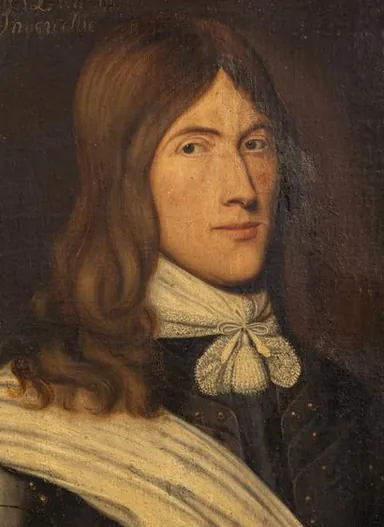
James LumsdaineRepresenter of the Baronial House of Innergellie
Representer of the Baronial House of Lumsdaine of Innergellie (James Ralph Sandys Lumsdaine of Innergellie)
brother is Chief of Clan Lumsden
family were barons of Innergellie
Credentials
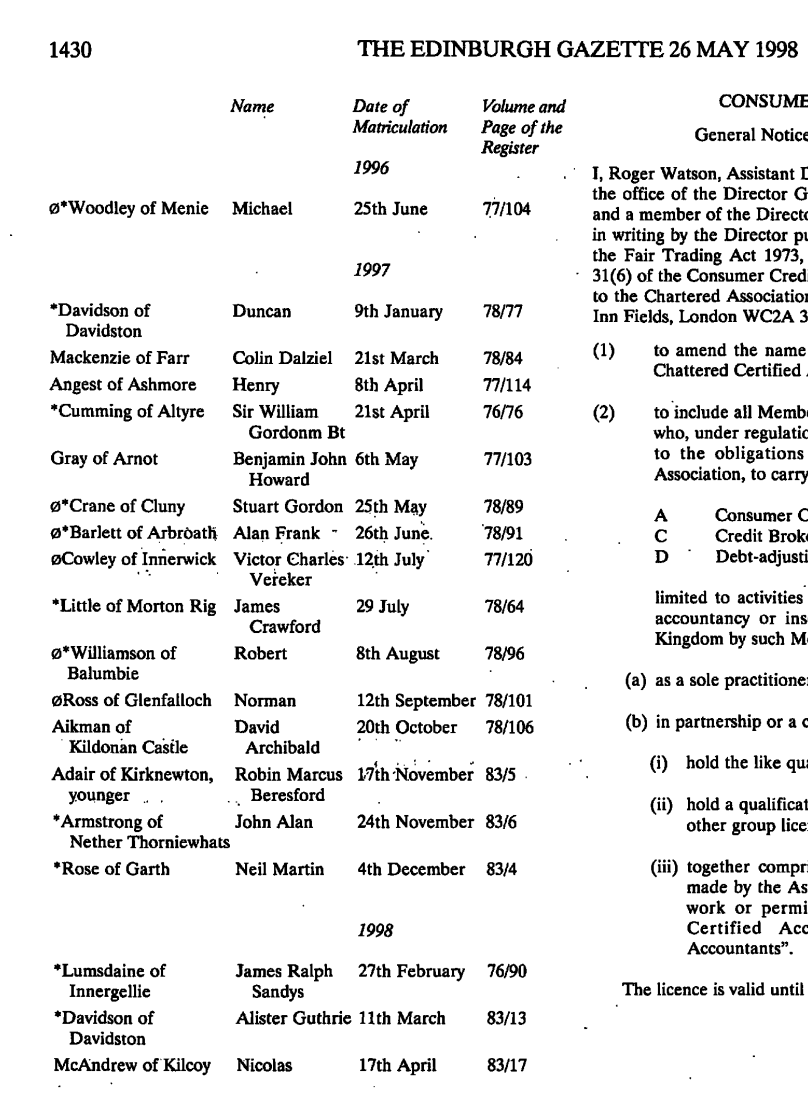
- • Lord Lyon recognised James Ralph Sandys Lumsdaine of Innergellie as Representer of the Baronial House of Lumsdaine of Innergellie, matriculating arms with a blue chapeau at LO 76/90 on 27 February 1998. The blue chapeau marks the representer of a baronial family no longer in possession of the barony. It is not recognition as Baron of Innergellie. The barony of Innergellie itself is not identified on the Roll.
- • Rolls of the Chiefs and Heads of Territorial Houses, Officially-Recognised by Lord Lyon King of Arms 27th Feb 1998 (LXXVI 90), EDINBURGH GAZETTE
- • Burke’s Peerage, 107ed. Burke's Peerage (Genealogical Books) Ltd, 2003, p. 2431 column 1 [brother is Chief of Clan Lumsden]
Authentication
A note on terminology: “Scottish feudal barony” or “feudal title” is an incorrect, defunct historical term for extant barons. Baronies were feudal until 28 November 2004, when feudal baronies were abolished and the dignity of baron was retained — an extant barony is no longer “feudal”. The correct term is Scottish barony or Scottish baron (or baron, lord or earl in the Baronage of Scotland, collectively the minor barons of Scotland); never “feudal baron”. Why the term is defunct →
A barony pledged on the Roll of Scottish Barons is treated by the Roll as hereditary and not in commercio. A pledged barony later conveyed outside the family forfeits its recognition on the Roll in perpetuity. What “Hereditary on the Roll” means →