
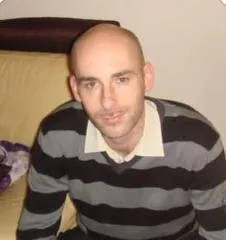
David WillienThe Baron of the Earldom of Erroll
Baron of Tulloch, see Earldom notes
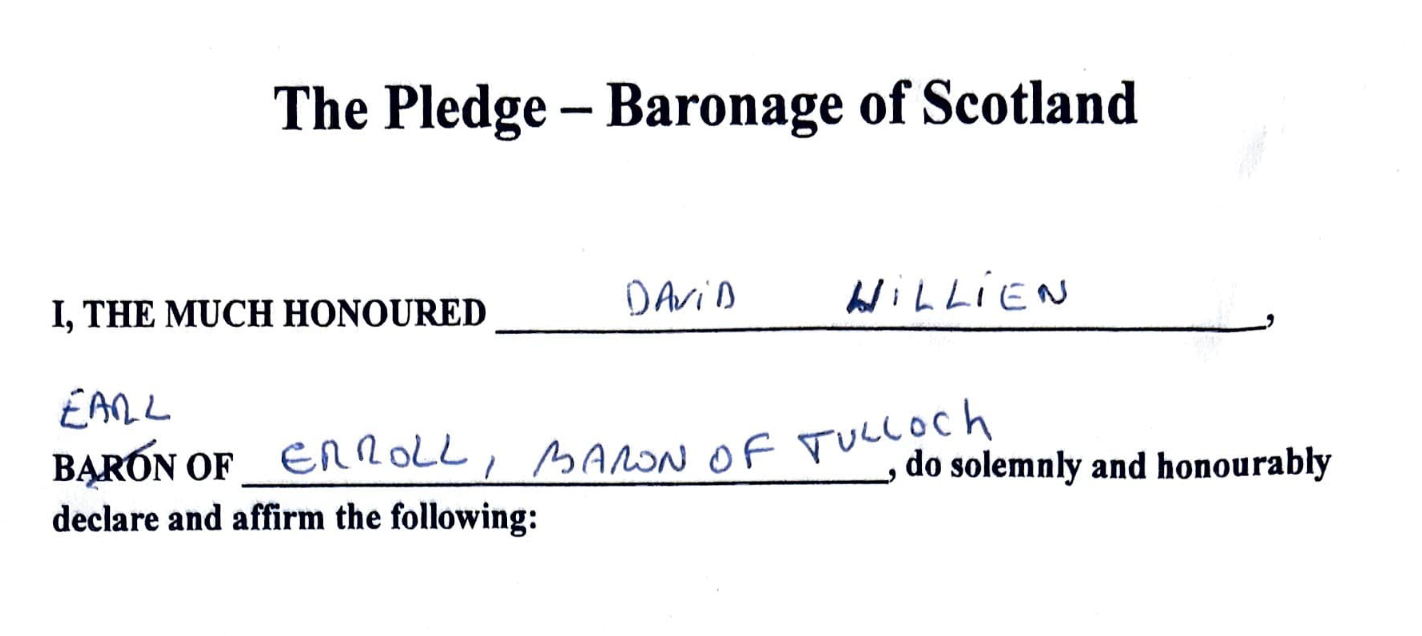
The Much Honoured Baron of the Earldom of Erroll (David Willien, holder of the dignity of the Earldom of Erroll in the baronage of Scotland and Baron of Tulloch)
Credentials
- • PLEDGED HEREDITARY TITLE, this label indicates that the holder has formally signed the Roll’s Pledge.
- • On the form "Baron of the Earldom": the Roll styles the holder of an earldom in the genus of barony as Baron of the Earldom. The Lyon Court used this form for Annandale in 1983, "Baron of the Barony of the lands of the Earldom of Annandale and Hartfell" (Letters Patent, 4th February 1983), and it follows the older usage recorded by Lord Lyon Innes of Learney: "Where a peer held a feudal barony (as well as his dignities of Baron-Banrent ('Lord')), his feudal Baronies are added to his style in the form 'Baron of the Barony of X——'" (The Robes of the Feudal Baronage of Scotland, Proceedings of the Society of Antiquaries of Scotland, vol. 79 (1944–45), p. 158). The Roll does not use the longer form for a barony, which is recorded simply as "Baron of X", the form upheld in the Esslemont petition of 1934 (same paper, pp. 162–163). It uses it for this earldom because the earldom has no shorter name that is true of its holder: no Lord Lyon has recognised a holder of this earldom in an earl's style, and the erected barony within the unit bears another name, Slains, now held separately. Lord Lyon Sellar held that the owner of lands erected into an earldom "has no claim to a style greater than that of baron" (Sturzenegger of Arran, c. 2010). The peerage Earl of Erroll is extant and distinct. See the Association's paper: baronage.com/…/non-peerage-earldoms
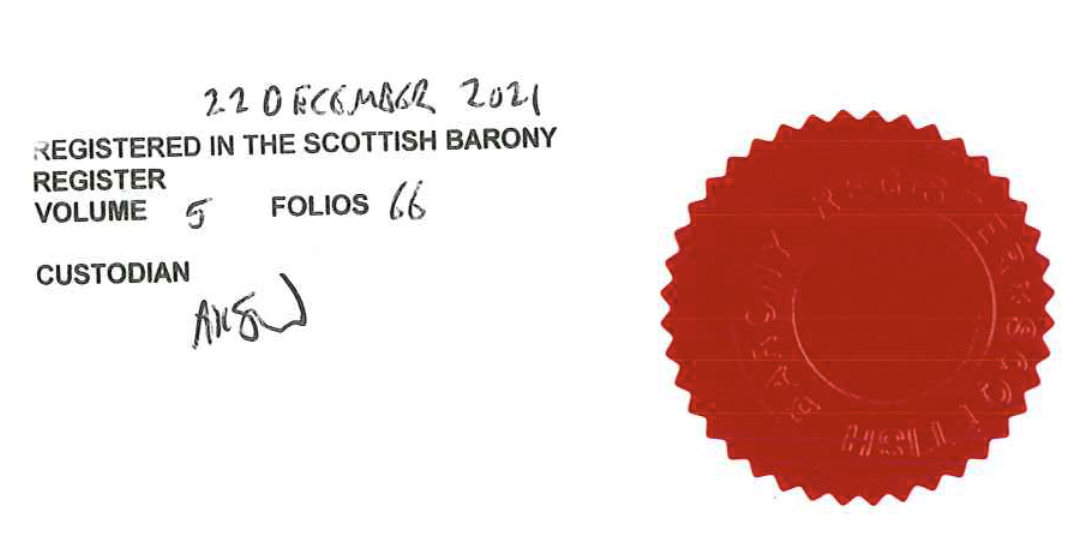
- • Scottish Barony Register: Erroll (Earldom), County of Perth, registered 22nd December 2021, Vol 5 Folio 66.
- • Previous holder: recognised by Letters Patent of Lord Lyon Morrow, 9th February 2018 (petition 15th May 2016), reciting that by registration in the Scottish Barony Register of 2nd November 2015 the petitioner "prima facie, holds the lordship and barony of Slains and the earldom of Erroll being of the genus of barony". The patent grants arms with "an Helm befitting his degree"; no style of Lord or Earl is recognised in it. The lordship and barony of Slains has since been registered separately (SBR, 17th December 2025) and is entered on this Roll under Slains.
- • The Earldom of Erroll in the Peerage of Scotland dates from 1452. The lands were incorporated as the free baronies of Erroll and Slains in 1541 and 1600, and by Crown charter of 29th March 1699, ratified by Parliament in 1700 (RPS 1700/10/253), were erected "in ane haill and free regality, lordship, earldom and barony … to be called the regality, lordship and barony of Slains and earldom of Erroll", with Slains Castle as caput. Of the non-peerage earldoms on this Roll, Erroll is one of two erected as an earldom, lordship and barony in one unit. How the earldom passed out of the peer's family has not been shown to the Roll.
- • Scottish Barony Register: Dignity of the Barony of Tulloch (County of Ross and Cromarty), registered 30th December 2016. The Custodian's confirmation of a registered barony is accepted by the Lyon Court as "for aught yet seen, sufficient proof of the existence and ownership of the barony" (Lord Lyon Sellar, Note in the Petition of the Baron of Cartsburn, 2009).
- • The lands of Tulloch near Dingwall, seat of the Baynes of Tulloch and later the Davidsons, are recorded in the printed Register of the Great Seal, most fully in a Crown charter of 24th March 1620 to John Bayne confirming "villam et terras de Tulliche … cum manerie de Tulliche" (RMS VIII no. 1). No charter erecting Tulloch into a free barony has been found in the printed register to 1651 (vols. II–VIII); the volumes for 1652–1668 have not been searched, and later charters and charters in private collections may exist. The document on which the registration rests has not been seen by the Roll. Tullich in Cromar, Aberdeenshire, and Tulloch in Balquhidder, Perthshire, are different places.
Authentication
A note on terminology: “Scottish feudal barony” or “feudal title” is an incorrect, defunct historical term for extant barons. Baronies were feudal until 28 November 2004, when feudal baronies were abolished and the dignity of baron was retained — an extant barony is no longer “feudal”. The correct term is Scottish barony or Scottish baron (or baron, lord or earl in the Baronage of Scotland, collectively the minor barons of Scotland); never “feudal baron”. Why the term is defunct →
A barony pledged on the Roll of Scottish Barons is treated by the Roll as hereditary and not in commercio. A pledged barony later conveyed outside the family forfeits its recognition on the Roll in perpetuity. What “Hereditary on the Roll” means →